
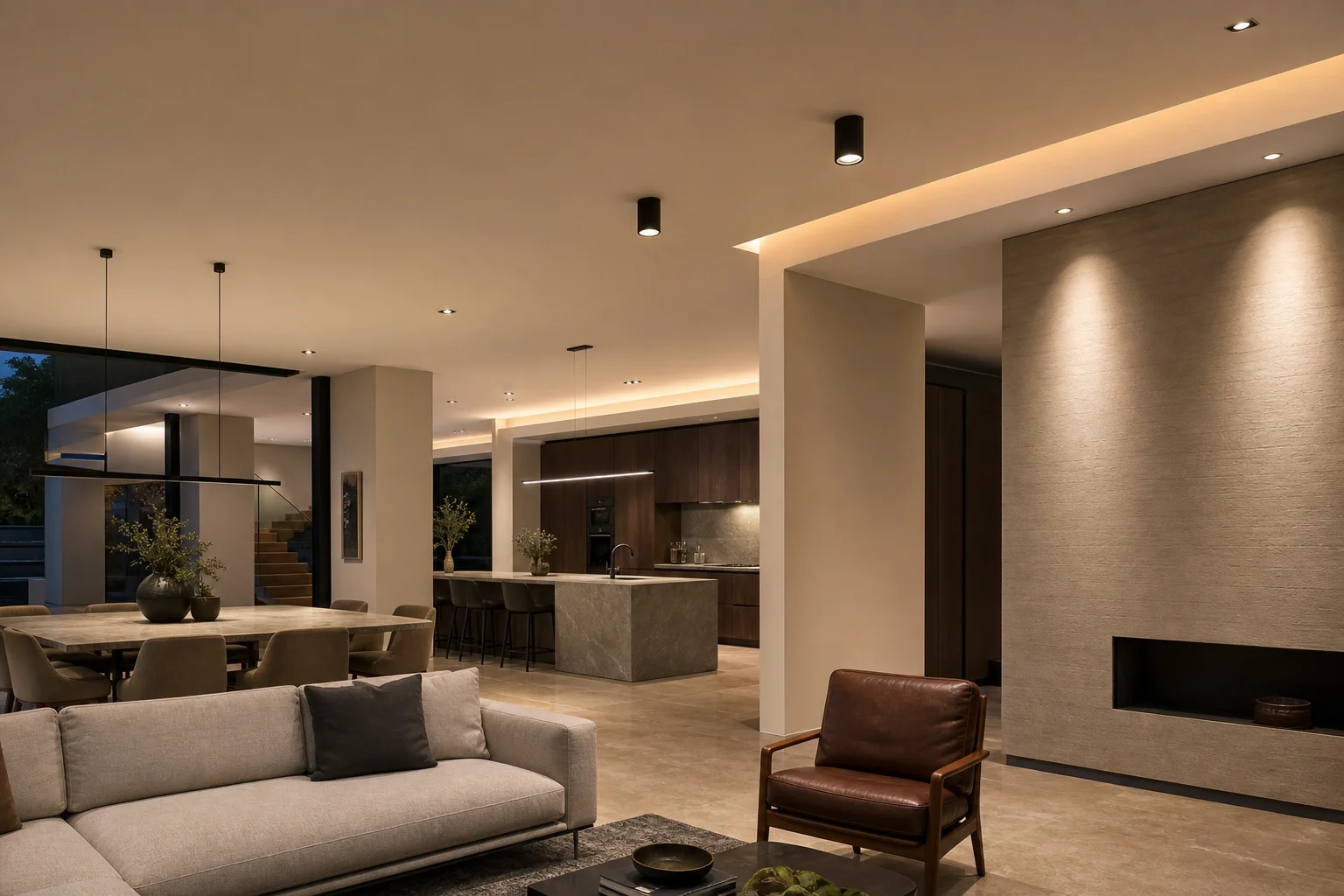
Why CRI Matters: Specifying Lighting for True Colour Representation
Introduction
Colour is one of the most expensive decisions in an interior. Stone, timber, fabric, art, paint, and metal finishes are all selected with precision. Yet poor lighting can distort every one of them.
CRI, or Colour Rendering Index, helps determine whether a light source reveals colours accurately or flattens them.
What Is CRI?
CRI measures how accurately a light source renders colour compared with a reference light source. The scale runs from 0 to 100.
80 CRI: acceptable for many general spaces.
90 CRI: recommended for premium interiors.
95+ CRI: ideal for galleries, luxury retail, make-up areas, and colour-critical spaces.
Why CRI Matters in Interior Design
Low-quality light can make timber look dull, stone lose depth, paint undertones shift, skin tones appear grey or harsh, food look less appetising, and artwork lose vibrancy.
In high-end interiors, accurate colour is not optional. It protects the design intent.
Where to Specify 90+ CRI
Kitchens
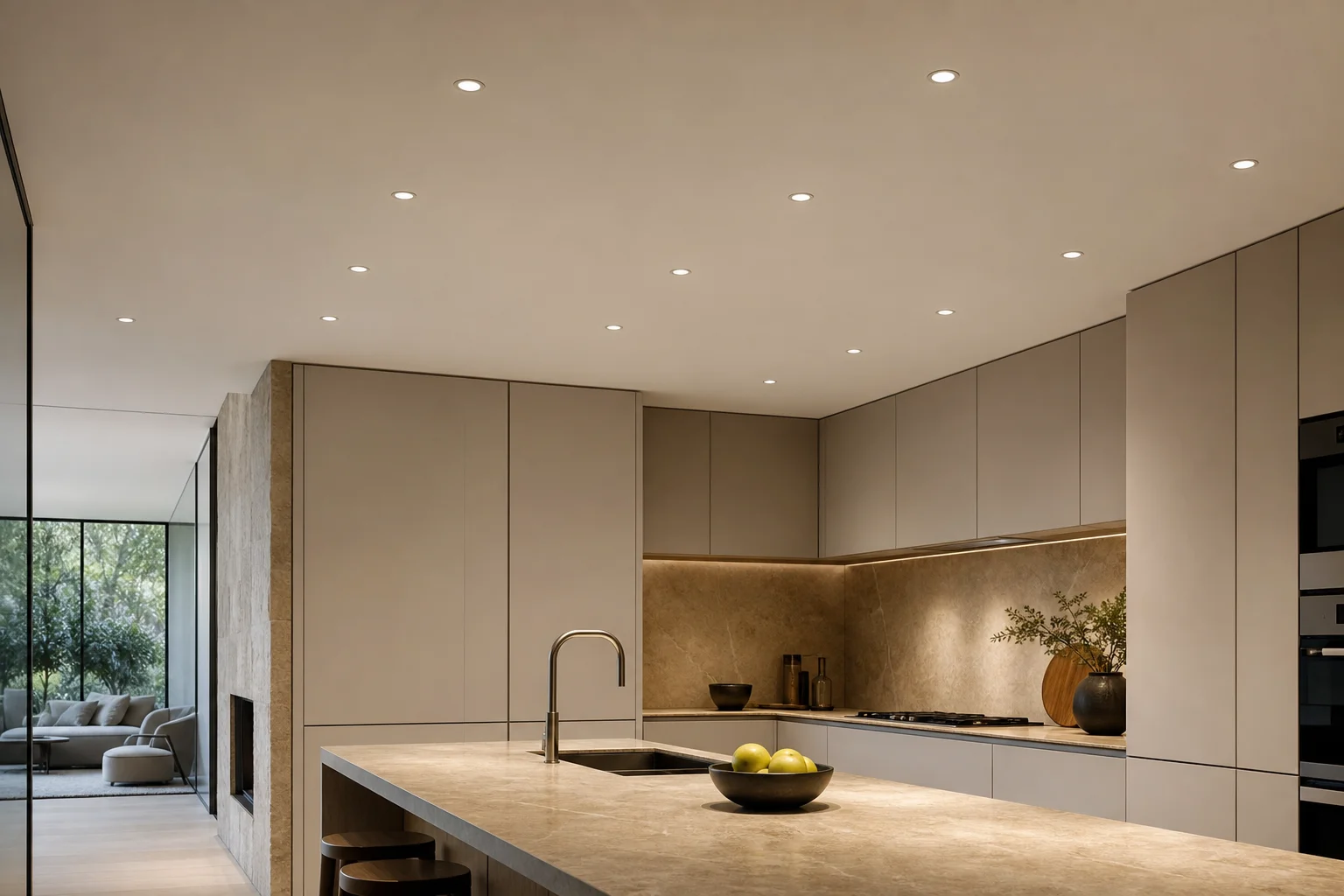
Use CRI 90+ over worktops, islands, and food preparation areas. This improves clarity and makes food, stone, and cabinetry appear more natural.
Bathrooms and Vanities
For grooming, shaving, make-up, and skincare, CRI 90+ is strongly recommended. Pair this with vertical face-level illumination for the best result.
Wardrobes and Dressing Rooms
Colour accuracy matters when selecting clothing. Use CRI 90+ in wardrobes, dressing rooms, and walk-in closets.
Retail and Showrooms
Retail lighting must represent products honestly and attractively. For fashion, furniture, jewellery, art, and décor, use CRI 90+ or higher.
Art and Feature Walls
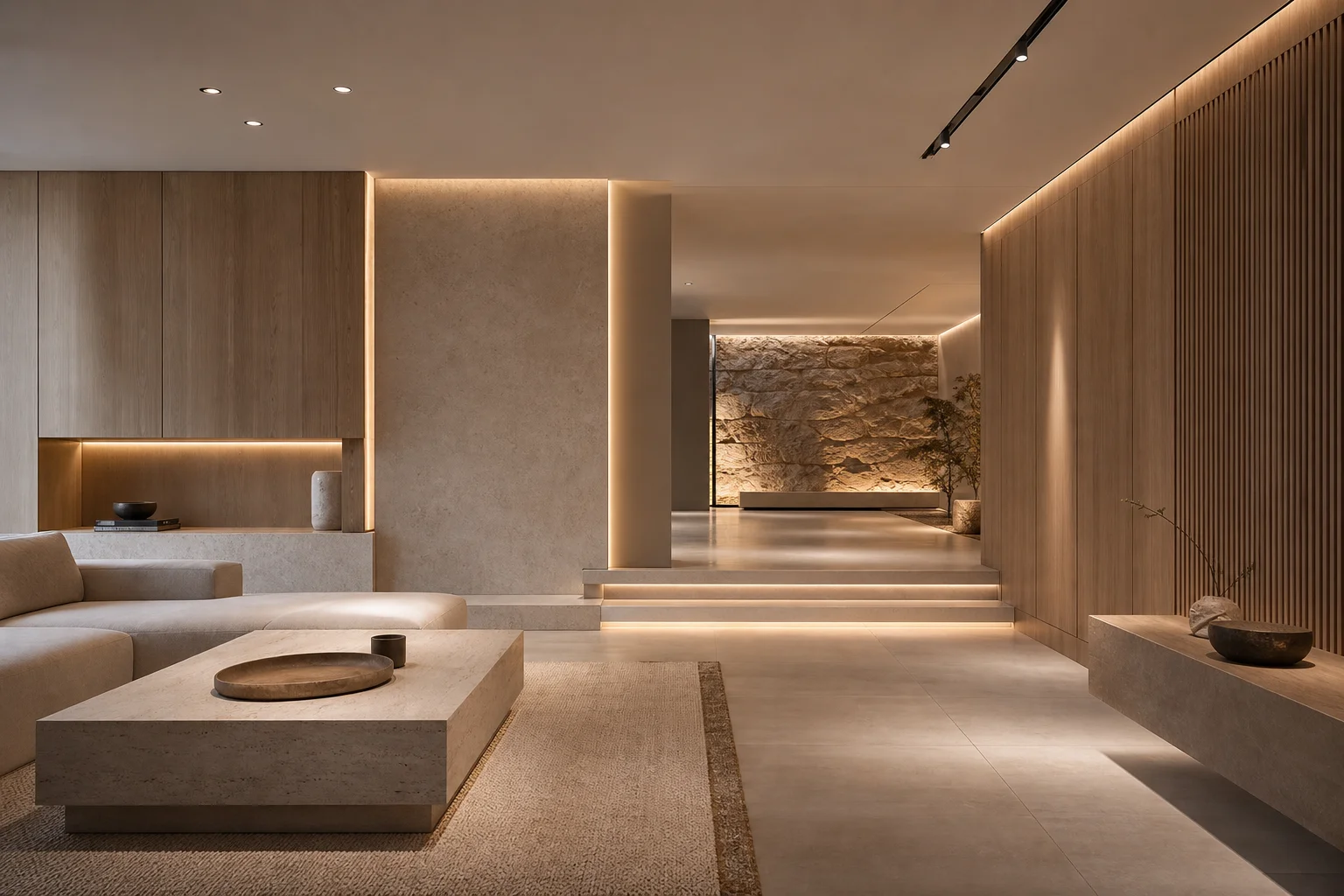
Artwork, textured plaster, wallpaper, timber panelling, and stone slabs all benefit from high CRI lighting. Use adjustable spotlights, wall washers, narrow or medium beam angles, and dimming where appropriate.
CRI and Colour Temperature Work Together
CRI measures colour accuracy. Colour temperature measures warmth or coolness. 2700K is warm and intimate, 3000K is refined and versatile, and 4000K is crisp and utility-focused.
Ask for More Than “Warm White”
“Warm white” is not a specification. A better specification includes colour temperature, CRI, beam angle, dimmability, IP rating where needed, finish, and trim detail.
Conclusion
CRI protects the integrity of an interior. Browse REO high CRI lighting or contact the REO technical team for specification support.
Written by REO Technical Team