
Architectural Minimalism: Lighting Design Trends for 2026
Introduction
Lighting design in 2026 is moving away from decorative excess and toward architectural precision. The most sophisticated interiors are not necessarily filled with visible fittings. They are shaped by controlled layers, warm materials, hidden sources, and quiet technical excellence.
Trend 1: Low-Glare Lighting Becomes Essential
Minimalist interiors expose every detail. Harsh downlights and visible glare disrupt the calm.
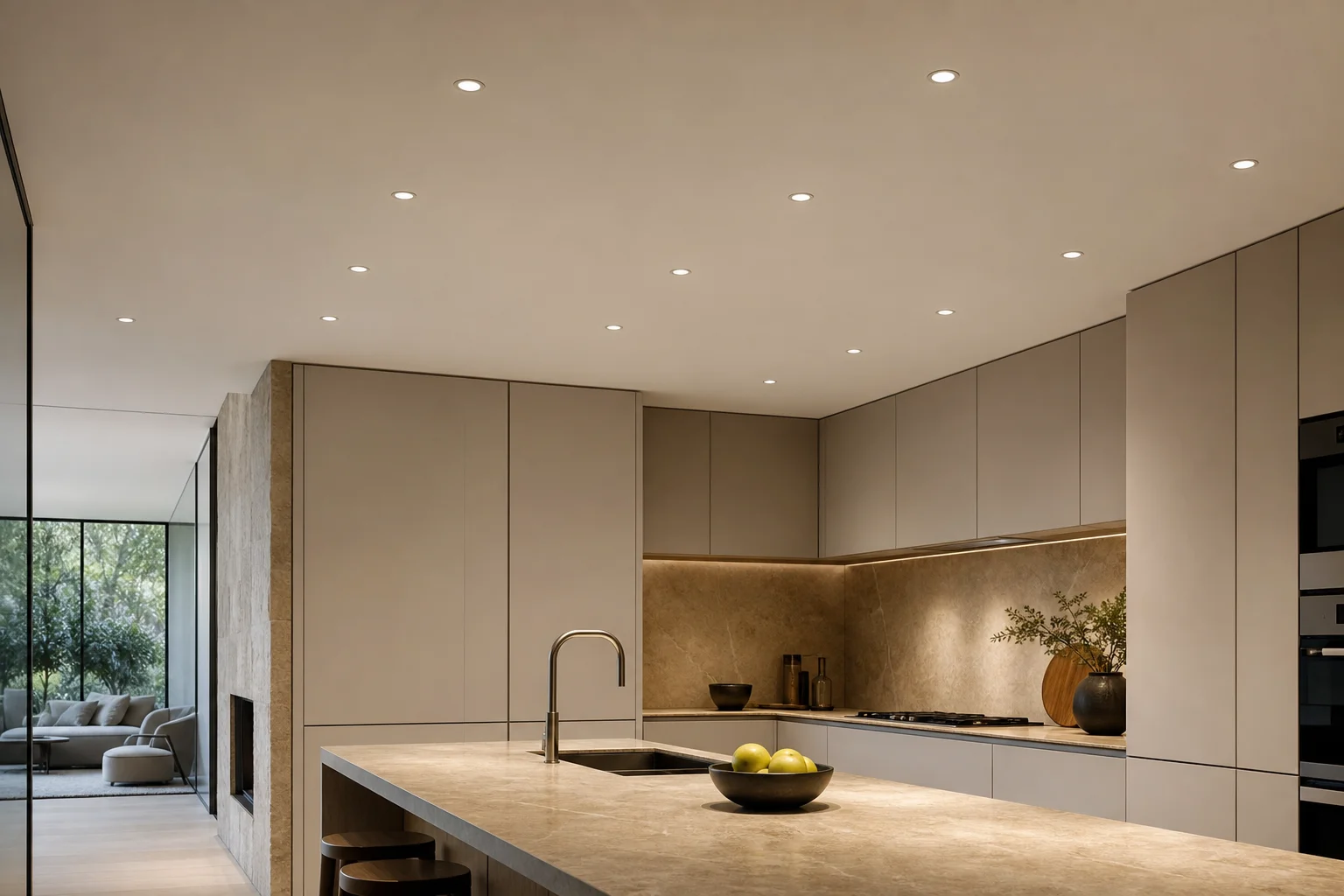
In 2026, expect stronger demand for deep-recessed downlights, anti-glare trims, black baffles, soft beam control, dimmable systems, and indirect illumination.
[PRODUCT EMBED: Low-Glare Architectural Downlights]
Trend 2: Warm Precision
Cool, clinical interiors are giving way to warmer minimalism. The look is still clean, but more tactile.
2700K for intimate residential spaces.
3000K for modern architectural interiors.
Avoid excessive use of 4000K in luxury homes unless the design specifically calls for crisp utility lighting.
Trend 3: Magnetic Track in Premium Residential Projects
Magnetic track systems are increasingly used in homes, not only retail environments. Their appeal lies in flexibility and architectural discipline.
Use magnetic track for open-plan living spaces, kitchens, galleries, passageways, home offices, and boutique hospitality-style interiors.
Trend 4: Hidden Linear Lighting
Linear lighting remains important, but the most refined use is hidden rather than exposed.
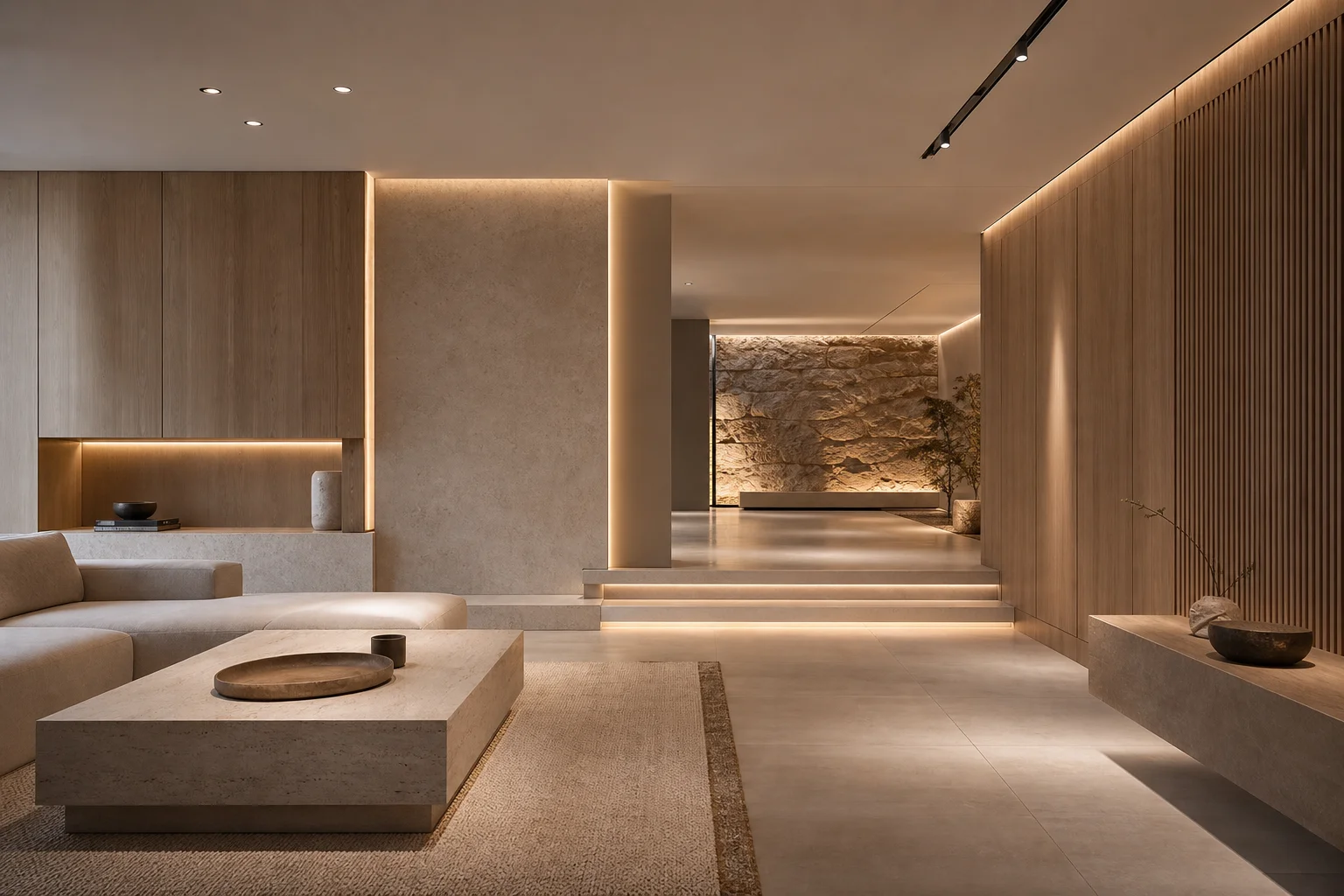
Use concealed linear lighting in ceiling coves, under floating vanities, beneath kitchen cabinets, behind mirrors, inside shelving, along stair treads, and in recessed wall details.
Trend 5: Surface-Mounted Forms as Architectural Objects
Where recessed lighting is not possible, surface-mounted fittings are becoming more refined. Cylinders, discs, and minimal directional forms can create rhythm across ceilings without appearing like an afterthought.
Trend 6: Fewer Decorative Fittings, Better Decorative Fittings
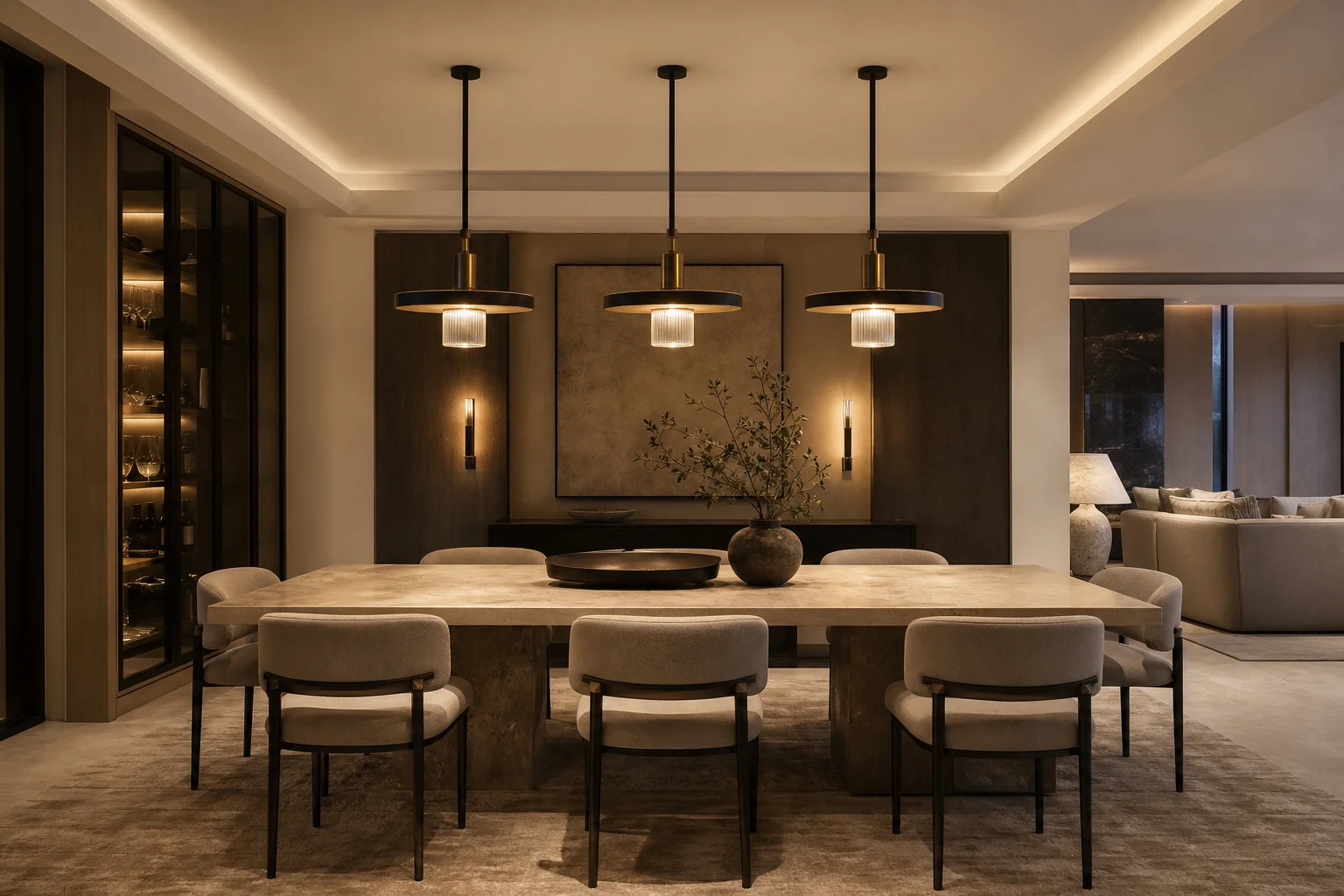
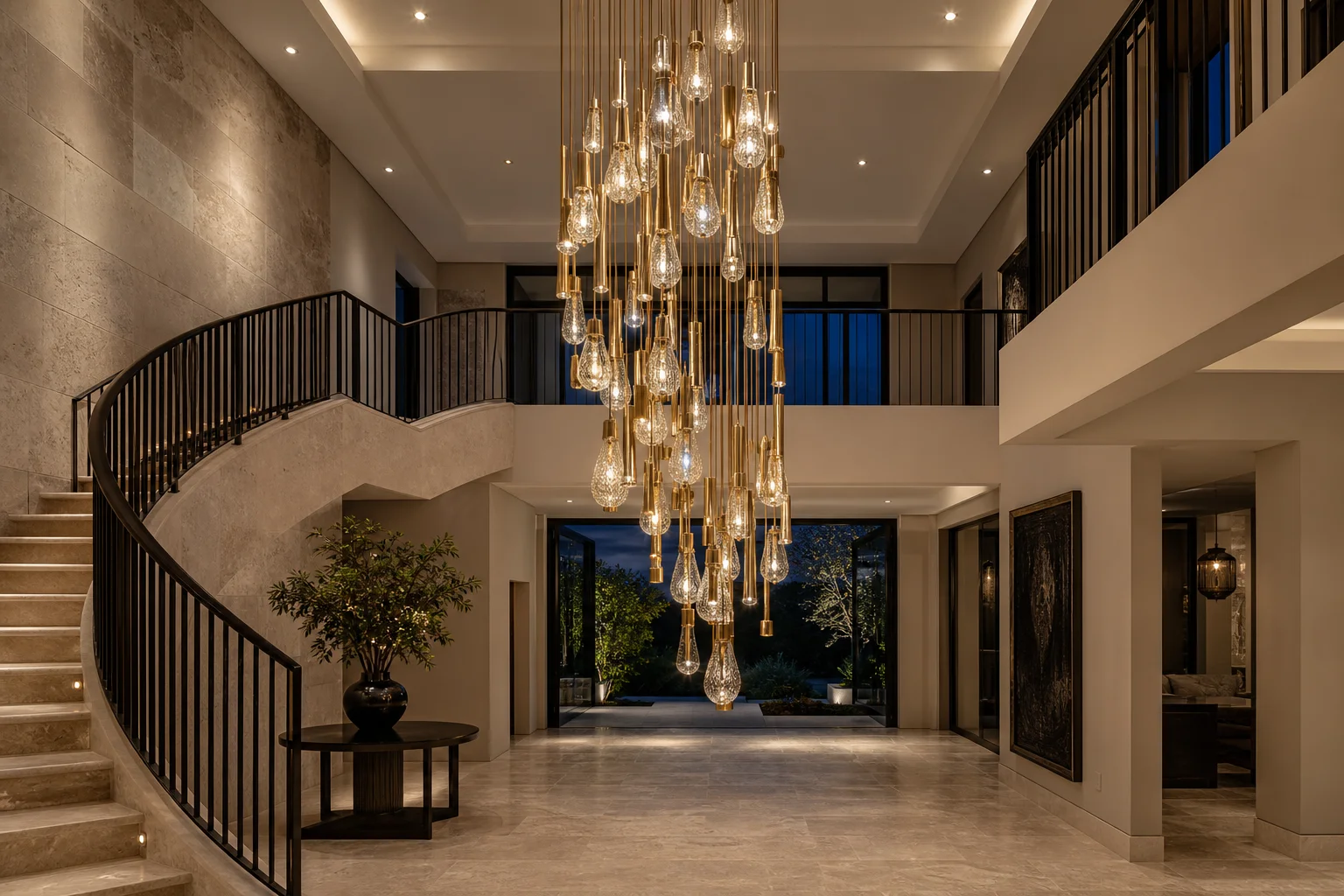
Decorative lighting is not disappearing. It is becoming more deliberate: a sculptural chandelier in a foyer, a refined pendant over a dining table, cordless lamps for atmospheric layers, or wall lights used as architectural punctuation.
Trend 7: Lighting Planned Earlier in the Project
The most important 2026 trend is procedural: lighting is being planned earlier. Early planning allows better circuiting, cleaner ceiling layouts, integrated linear details, correct driver placement, fewer visible compromises, and better coordination with architects and electricians.
Conclusion
Lighting in 2026 is defined by restraint, warmth, and technical precision. Browse REO architectural lighting or contact the REO technical team for project specification support.
Written by REO Technical Team