
Statement Illumination: Styling Oversized Chandeliers
Introduction
An oversized chandelier can define an interior before the furniture is even noticed. In double-volume entrances, stairwells, dining rooms, and formal lounges, it becomes both illumination and sculpture.
The challenge is scale. A chandelier should command attention without overwhelming the architecture.
Where Oversized Chandeliers Work Best
Oversized chandeliers are most effective in spaces with volume, visual importance, or a natural central axis.
Ideal locations include double-volume entrances, stairwells, formal dining rooms, large lounges, hotel lobbies, boutique hospitality spaces, feature foyers, and high-ceiling bedrooms.
Sizing for Double-Volume Spaces
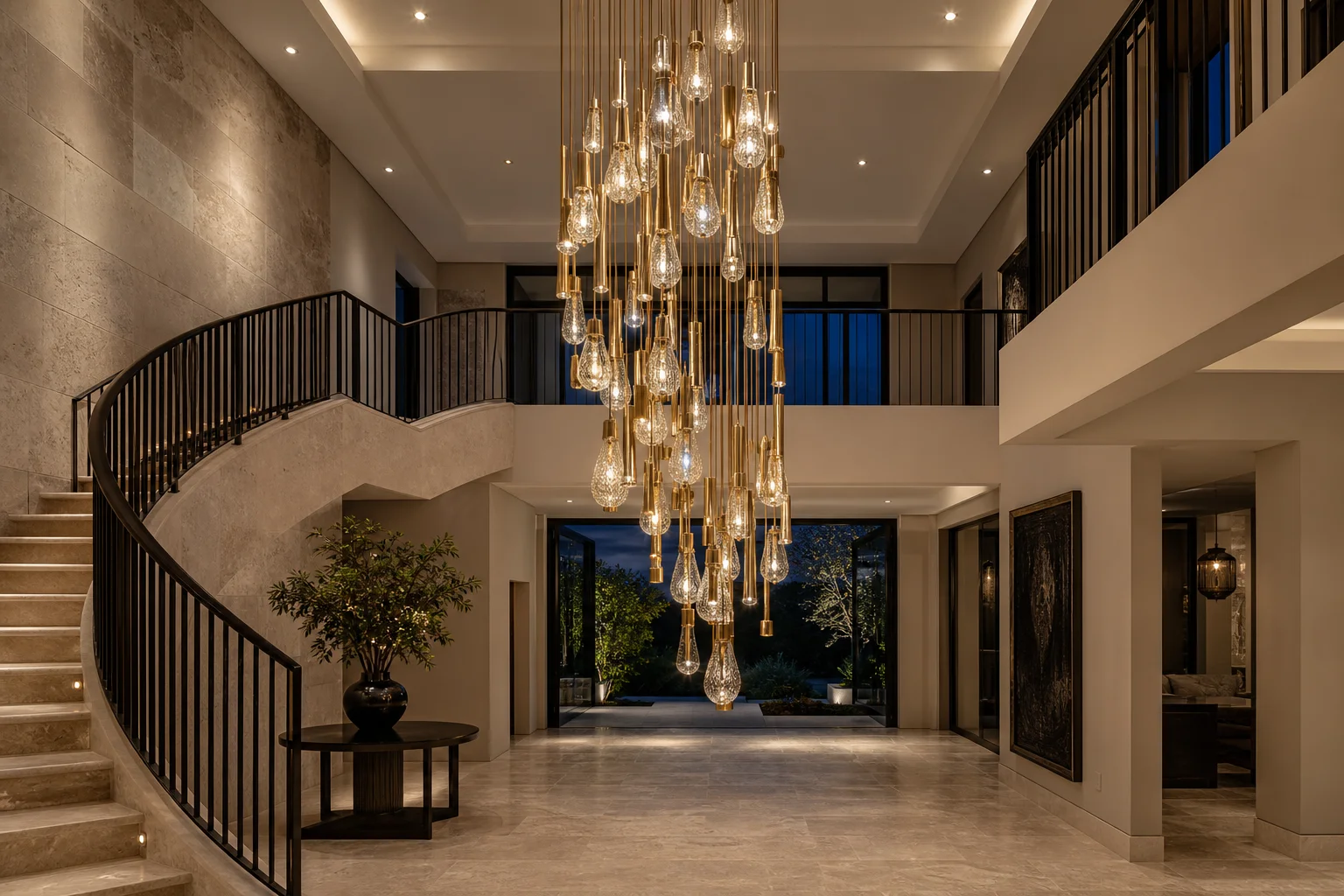
In double-volume interiors, the chandelier should be visible from multiple viewpoints.
Width Guidance
For large spaces, the chandelier width can often be between 60cm and 120cm, depending on room proportions.
Height Guidance
A chandelier in a double-volume space should have vertical presence. The fitting should occupy the volume, not disappear near the ceiling.
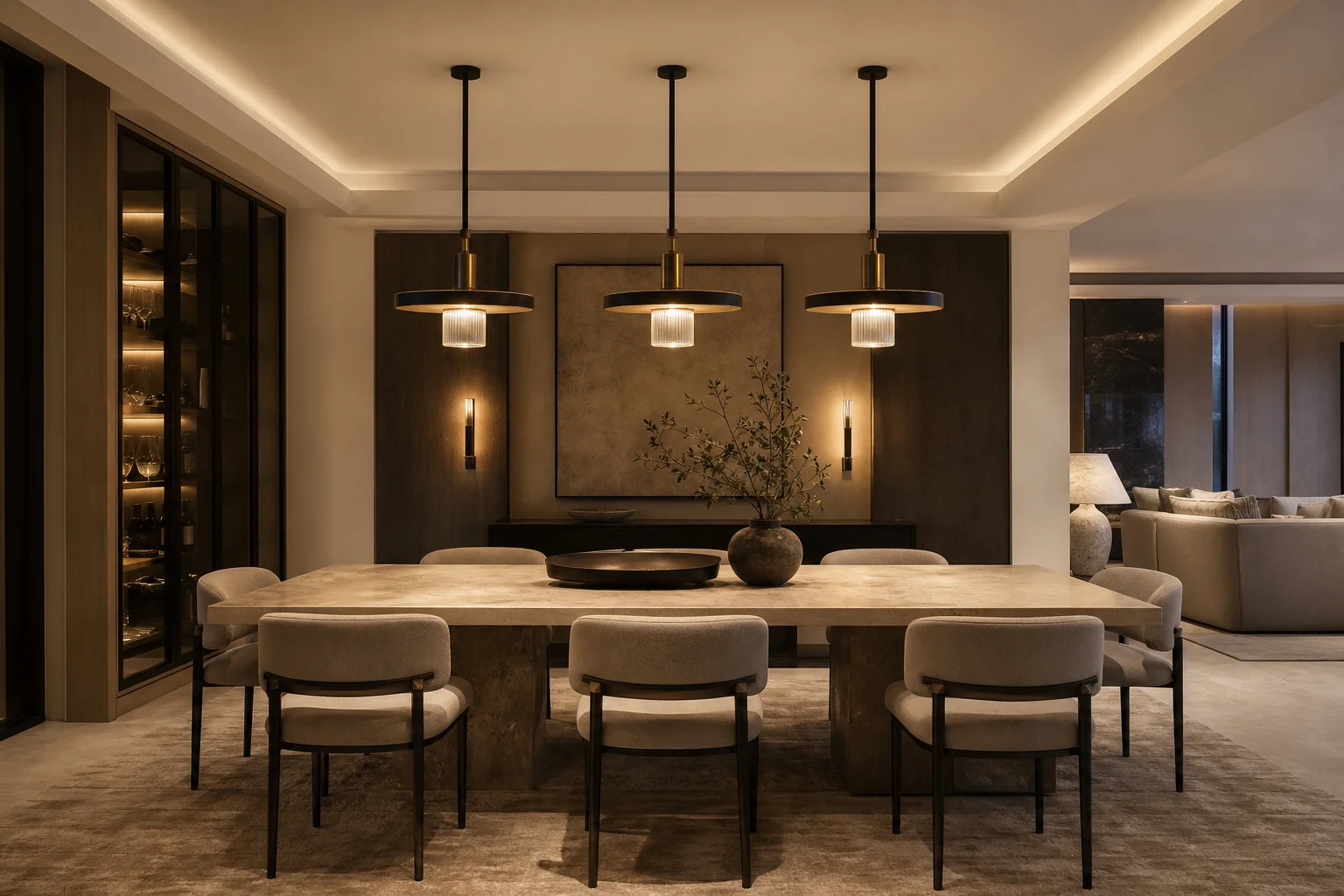
Dining Room Statement Chandeliers
Over a dining table, scale must still relate to the table. Chandelier width should be approximately one-half to two-thirds the table width and the bottom of the fitting should sit 75cm to 90cm above the tabletop.
For oversized chandeliers, visual transparency matters. A large fitting with an open frame may feel lighter than a smaller solid form.
Stairwell Chandeliers
Stairwells are excellent locations for vertical chandelier compositions. The chandelier should align with the stair void or central visual axis, not necessarily with the floor below.
Maintain at least 210cm clear head height in any circulation zone.
Choose the Right Finish
Popular finishes for luxury interiors include brushed brass, aged bronze, matte black, smoked glass, opal glass, champagne metal, and warm metallic finishes.
Control Brightness with Dimming
A statement chandelier should almost always be dimmable. Separate chandelier lighting from downlights and use it as an atmospheric layer, not the only light source.
Conclusion
An oversized chandelier is most successful when it is scaled to the architecture, positioned with precision, and controlled for atmosphere. Browse REO statement chandeliers or contact the REO technical team for sizing and placement guidance.
Written by REO Technical Team